








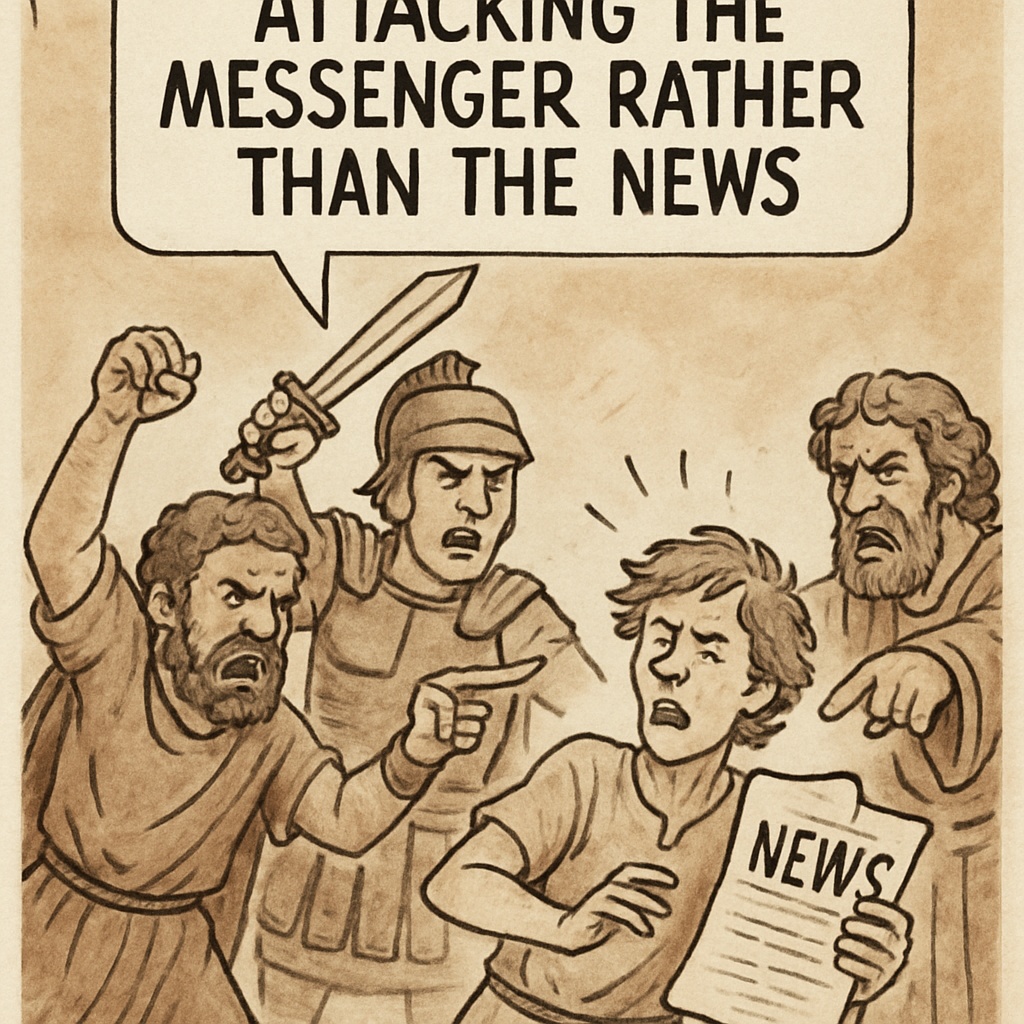
























Ever notice how your mom’s “helpful” email reminders feel oddly pointed? Or how your dad’s insistence on certain formalities makes you want to scream into a pillow?
You’re not imagining it. What older generations consider proper etiquette often lands very differently with millennials and Gen Z. The disconnect isn’t just about different communication styles; it’s about fundamentally different interpretations of respect, boundaries, and authenticity.
I’ve been fascinated by this generational divide ever since my father, after thirty years in sales management, couldn’t understand why his younger colleagues found his “professional” communication style off-putting. The same phrases he’d used to build relationships throughout his career were suddenly being decoded as passive aggressive digs.
After countless conversations with friends across different industries and age groups, I’ve identified eight habits that perfectly capture this cultural clash. These aren’t malicious behaviors; they’re well-intentioned gestures that somehow got lost in translation between the generations.
1. Ending texts with periods
My Sunday calls with my mother often involve explaining why her perfectly punctuated text messages make my younger sister anxious. “But it’s proper grammar!” she insists. And she’s right, technically.
For boomers, ending a sentence with a period is just correct writing. It shows care, attention to detail, and respect for the recipient. But for younger generations who grew up with instant messaging, that lonely period at the end of “Ok.” reads like a cold shoulder.
In the fluid, conversational world of digital communication, periods create unnecessary finality. They signal that the conversation is over, that you’re annoyed, or worse, that you’re disappointed.
2. CCing your boss on everything
A teacher friend recently vented about a parent who CC’d the principal on every single email exchange about homework assignments. “It feels like she’s building a case against me,” she said, exhausted by the perceived threat.
In traditional corporate culture, copying supervisors was considered transparency. It kept everyone in the loop and showed you had nothing to hide. For boomers who navigated office politics for decades, this habit became second nature.
But younger workers interpret this differently. To them, immediately looping in the boss feels like tattling, like you’re escalating before even trying to resolve things directly. It undermines trust and suggests you’re more interested in covering your bases than actually solving problems.
The shift reflects changing workplace dynamics where flat hierarchies and direct communication are valued over chain-of-command formalities.
3. The classic “as per my last email”
Nothing makes millennials and Gen Z workers roll their eyes quite like seeing this phrase in their inbox. What boomers intend as a helpful reference to previous correspondence reads as the professional equivalent of “I already told you this, weren’t you listening?”
The phrase emerged from a genuine need to maintain paper trails and reference important information. In pre-digital offices, keeping track of conversations mattered. But in today’s searchable, instantly accessible email world, it feels redundant and condescending.
Younger generations prefer directness: “Hey, circling back on this” or simply restating the information without the formal callback. They value efficiency over formality, and “as per my last email” feels like unnecessary corporate theater.
4. Leaving voicemails for non-urgent matters
My phone shows three missed calls and a voicemail from an unknown number. My heart rate spikes. Someone must have died, right? Nope, it’s just someone from my parents’ generation wanting to know if I received their email about Saturday’s dinner plans.
For boomers, voicemail is polite and personal. It shows you took the time to call, to use your actual voice. It’s warmer than text, more immediate than email.
But millennials and Gen Z treat voicemails like emergency broadcasts. If it’s not urgent enough for repeated calls or important enough for a scheduled conversation, just text. The anxiety of seeing that voicemail notification, the time required to listen, the awkwardness of calling back; it all feels unnecessarily heavy for routine communication.
5. Saying “no offense, but…” before criticism
“No offense, but that presentation could have been more organized.” The boomer delivering this feedback genuinely believes they’re softening the blow. They learned that acknowledging potential hurt feelings showed emotional intelligence.
Yet younger generations hear it differently. Starting with “no offense” actually highlights that you’re about to say something offensive. It’s like announcing “I’m about to insult you, but I’m warning you first, so you can’t get mad.”
This generational divide reflects changing attitudes about feedback culture. Millennials and Gen Z prefer either direct, constructive criticism without disclaimers, or the popular “compliment sandwich” approach. The “no offense” prefix feels passive aggressive because it acknowledges harm while proceeding anyway.
6. Using quotes around words unnecessarily
We need to have a “discussion” about…
I think older folks often use quotation marks for emphasis, thinking they’re adding weight to important words. In their handwritten notes and early typing days, quotes were a way to highlight key concepts without bold or italic options.
But in digital communication, unnecessary quotes read as sarcasm or doubt. That “help” wasn’t really helpful. That “discussion” is actually a reprimand. Younger generations have been trained by internet culture to read quotes as ironic air quotes, not emphasis.
7. Replying all to say thanks
Picture this: An email goes out to forty people with meeting notes. Then comes the avalanche. “Thanks!” “Received!” “Much appreciated!” Each reply-all is meant to show gratitude and acknowledgment.
Boomers see this as courtesy. Everyone should know you received the information and appreciate the sender’s effort. It’s the digital equivalent of a polite nod in a meeting.
Millennials and Gen Z see inbox terrorism. Every unnecessary reply-all is another notification, another email to delete, another interruption to their workflow. They’ve grown up with information overload and have developed aggressive filters for relevance. A simple thumbs up emoji in a direct message would suffice, if any response is needed at all.
8. Scheduling calls without asking first
The calendar invite appears: “Quick Call – 2 PM Tuesday.” No context, no prior discussion, just an assumption that you’ll rearrange your day for an unscheduled conversation.
For boomers, this shows initiative and respect for everyone’s time by formally scheduling instead of playing phone tag. They’re being organized and professional.
But younger workers see this as boundary crossing. Without knowing the topic or urgency, they can’t prepare properly or determine if the call is even necessary. Could this be an email? A quick Slack message? The anxiety of not knowing makes the gesture feel controlling rather than considerate.
Final thoughts
These generational misunderstandings aren’t really about right or wrong. They’re about evolution; how communication norms shift with technology and cultural values.
Understanding these differences has helped me navigate both my Sunday calls with mom and my group chats with friends. Sometimes I add periods for my parents and remove them for everyone else. I’ve learned to decode the intention behind the “as per my last email” from older colleagues while choosing different words myself.
The key isn’t choosing sides but recognizing that good intentions can still create friction when filtered through different generational lenses. Maybe next time you receive a voicemail about dinner plans or see unnecessary quotes in an email, you can smile at the effort behind the awkwardness.
After all, we’re all just trying to connect, even if we’re speaking slightly different languages.