






























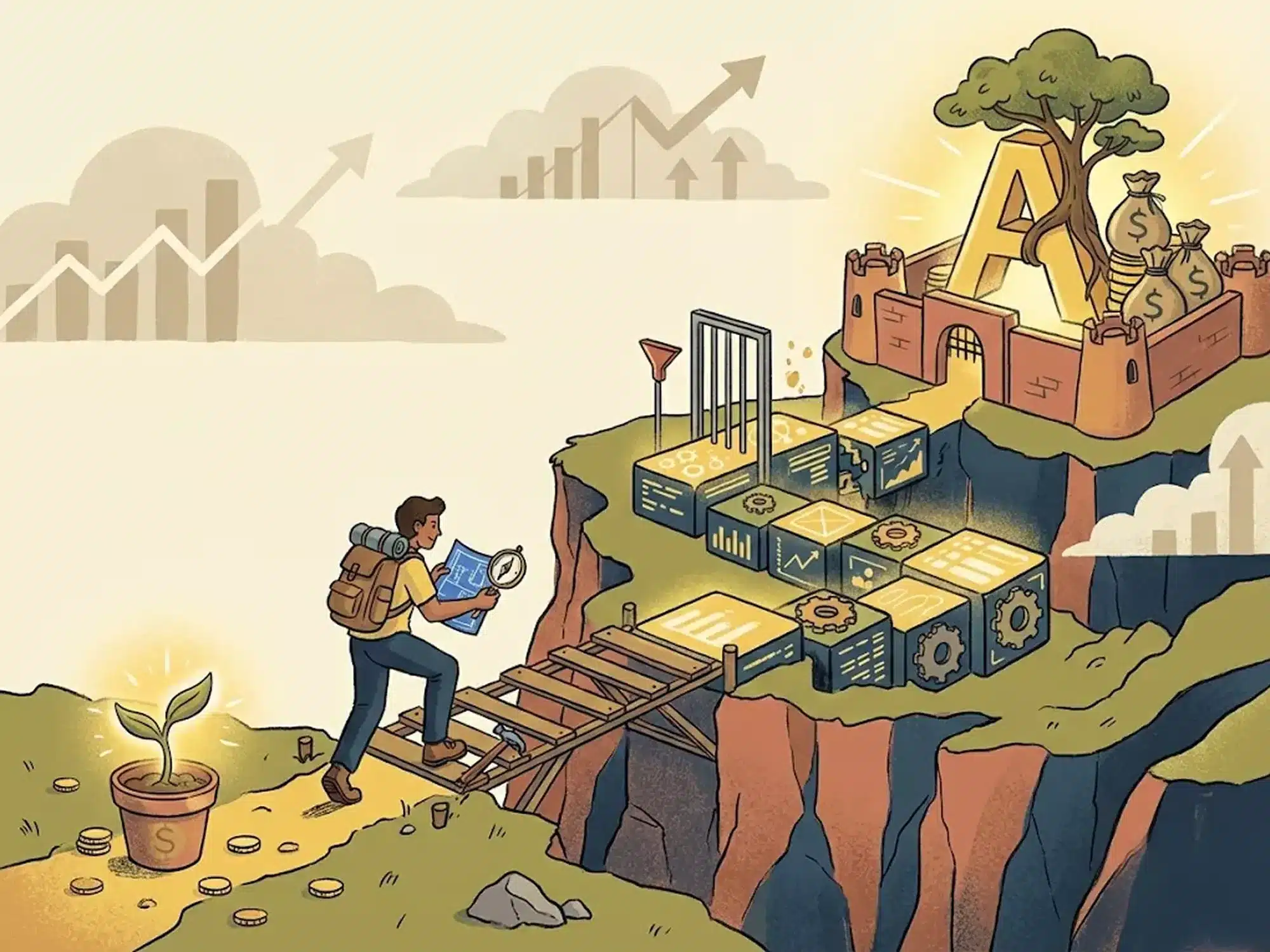
For years, the journey from seed to Series A followed a familiar rhythm. Raise a seed round, build early product market validation, show strong growth signals, and advance to an institutional round within 12 to 18 months.
That path has changed.
Today, moving from seed to Series A takes longer, requires more proof points, and demands a level of operational discipline that many early stage companies are not prepared for. As we study recent market cohorts, one trend is unmistakable: the graduation rate from seed to Series A has fallen sharply. Market wide, fewer than half of seed companies are making the leap, which is a substantial drop from historical norms.
This is the new reality for founders and investors alike.
The Series A Bar Has Been Reset
In the current environment, the expectations for a Series A are clearer and more consistent than they have ever been. Investors want to see:
- Meaningful ARR that reflects not just early momentum but repeatability
- Strong unit economics that demonstrate a viable business model
- A credible path to efficient growth that removes guesswork and shows the company can scale responsibly
The days of advancing on vision alone are behind us. The market now rewards companies that can show durable, efficient progress based on fundamentals, rather than just top line growth.
The Broader VC Market Tells the Same Story
The data reinforces this “flight to quality.”
At the height of the cycle in 2021, nearly 20,000 venture deals were completed in a single year. Fast forward to the first nine months of 2025, and that number has fallen to roughly 10,600, which represents a dramatic decline in activity. Yet, the total capital invested has remained relatively strong, which means dollars are now flowing to fewer companies.
This concentration is meaningful.
Investors are more selective. Rounds are going to companies with clearer metrics, stronger fundamentals, and founders who have demonstrated an ability to operate with discipline. At the same time, seed pricing has normalized, which provides a healthier alignment between investors and founders and sets companies up for long term success rather than short lived momentum.
Why This Market Rewards More Than Capital
When the timeline from seed to Series A extends, the list of things a startup must accomplish along the way also expands. Founders can no longer rely on capital alone to bridge the gap. They need real operational support including help with product, go to market, finance, hiring, customer success, and the thousands of details that create execution risk.
This is where our approach at York IE is specifically designed to shine.
We have always believed that early stage investing requires more than writing checks. It requires hands-on engagement, disciplined initial investments, and the flexibility to double down on companies that demonstrate real traction and operational progress. This is not new for us. It has become the market standard.
Our model was built for this environment.
What Founders Should Take From This Moment
If you are building a company today, you are operating in a market that rewards clarity, discipline, and scale ready execution.
A few takeaways to keep in mind:
- Be intentional about the metrics that matter. Retention, efficiency, and repeatability will carry you to Series A.
- Run lean and build momentum the right way. This market rewards founders who know where every dollar goes and how each decision supports long term scale.
- Seek partners who can help you build rather than simply fund you. Capital is important, but execution is what unlocks your next round.
A Better Market for Strong Companies
This environment is not a challenge. It is a filtering mechanism. The companies that can demonstrate real value, sustainable economics, and operational excellence are not struggling to get funded. In many cases, they are raising on better terms because investors have more conviction in their fundamentals.
At York IE, we are committed to backing companies that are building the right way: intentional, efficient, and with a clear path to scale. As the market continues to evolve, the alignment between capital and capability will only become more important.
The path from seed to Series A may be longer today, but for companies that can execute, it is also clearer than ever.