























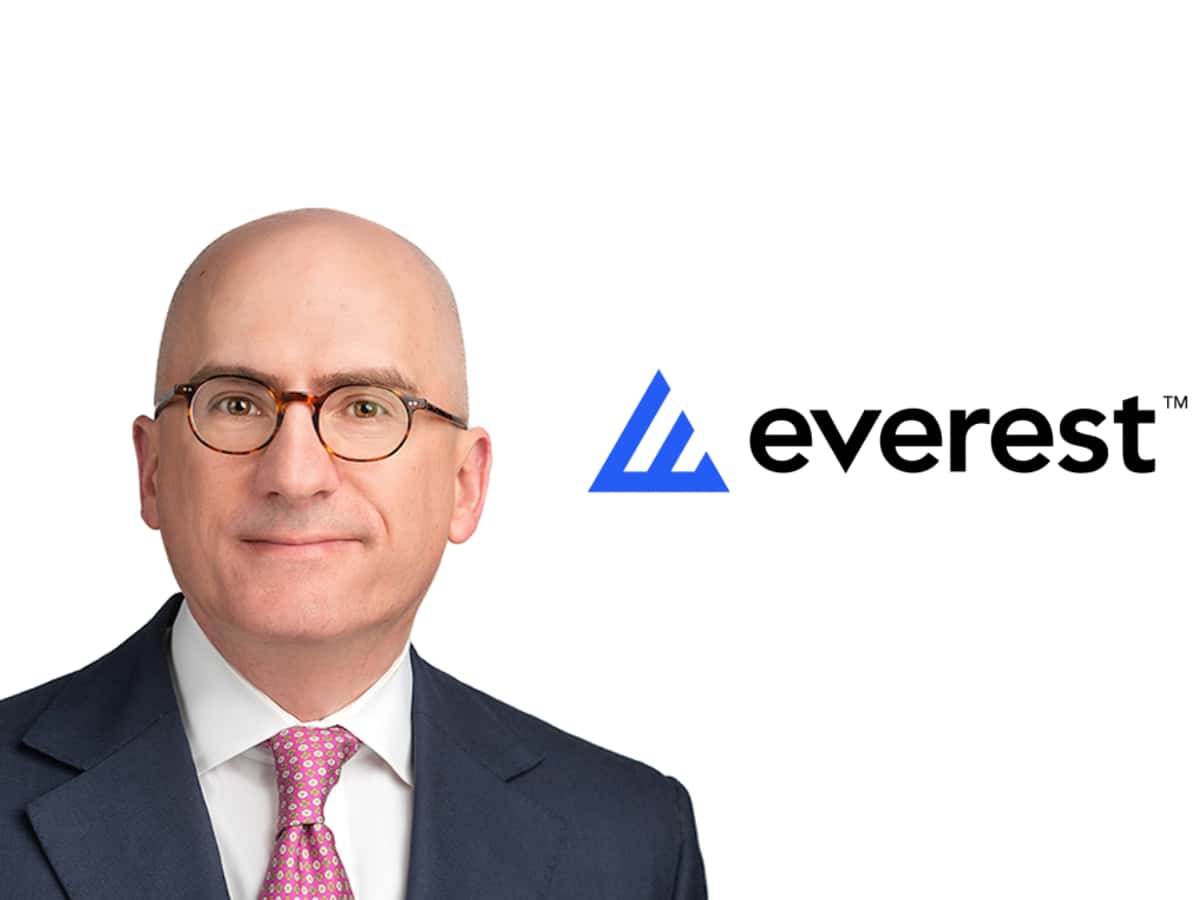





The global market for insurance-linked securities (ILS) is entering a new phase of stability. Following the key January 1, 2026 reinsurance renewal season, Aditya Dutt, President of Aeolus Capital Management, suggests that the sector has transitioned from a period of high volatility into a more disciplined, self-regulating era.
Dutt was recently representing his firm, specialist ILS and reinsurance investment manager Aeolus Capital Management Ltd., during an AM Best hosted webinar that focused on the reinsurance renewals and market outlook.
According to Dutt, the recent behaviour of investors signals an “increasing level of sophistication” that has effectively balanced the needs of both insurance companies and the capital providers who back them.
While traditional reinsurers often rely on decades of historical data, the ILS industry is relatively young, with a lifespan of approximately 25 years.
However, Dutt suggests that this shorter window has provided a comprehensive education for its participants.
“I think from an ILS perspective, our industry’s lifespan is much shorter than the average reinsurer who’s looking back several decades. So, if you think about the ILS markets, it’s really about 20 to 25 years old and ILS investors have probably been through two or three cycles at this point, at least two,” Dutt explained during the webinar.
“I would actually say the perspective now, having gone through a couple of cycles, and having seen a period like 2007 to 2014 or ‘15 with almost no losses, having seen a period of very, very low interest rates, very, very low risk margins in the property cat market, but also having seen a generational hard market like 2023, I think the investors now have excellent bookends on how to look at this market.”
This historical context has replaced speculation with a “clear-eyed” understanding of risk. Dutt highlighted that this evolution has been a long-term trend, stating: “I have actually, over the last decade, seen increasing level of sophistication, and I would say, a very, very healthy response to what we saw at 1/1.”
One of the key indicators of this new maturity was the reaction to the most recent 1/1 renewals. Rather than a surge of capital destabilising the market, Dutt described the response as disciplined.
“I think the reaction to what occurred at 1/1 2026, was actually a very measured, healthy and appropriate reaction. My estimation of what investors did, certainly not to be specific to each one, but as a general matter, was to keep capital roughly flat in the sector, maybe a little bit more marginally higher,” Dutt explained.
He continued: “Cat bonds, because of their excellent track record over the last quarter century have had inflows of capital, but overall, I would say ILS capital grew slower year-on-year than it did in prior years.
Dutt also observes that the market has reached a point of equilibrium where the economics are well-balanced, representing a significant departure from the “pendulum” position of 2023.
“I think it’s important to sit back and realise we’re in a fundamentally very strong market for reinsurers. We are in a very, fundamentally strong market for insurers. Most insurance companies, most cedents, are getting excellent coverage and a fair and acceptable price for reinsurance. It’s not the pendulum position of 2023, it’s certainly not a soft market. But I would say economics are very well balanced, and external investors see that and recognise that,” Dutt added.
As the industry looks toward the remainder of 2026, the appeal of the sector is increasingly tied to its performance relative to broader financial markets.
“I think for most global investors, whether they’re invested directly into reinsurance companies or into ILS funds, there is almost always an absolute comparison, i.e. ourselves versus ourselves. How did we do relative to ourselves last year? How did we do relative to a cycle? And then there’s a relative comparison versus other asset classes. I think the more those two diverge, the more interesting the perspective becomes for investors,” Dutt noted.
“How are they seeing this evolve over the next year with respect to returns, volatility, as you said. In terms of returns, I think investors are very clear-eyed about what to expect next year. Almost all ILS managers provide pro-forma outlooks, pro-forma portfolios that very clearly spell out how pricing and terms have impacted a new portfolio. I think they’re pretty clear-eyed about that.”
Lastly, Dutt also highlighted that while other markets faced volatility in the fourth quarter of 2025, the reinsurance sector’s stability became a primary selling point.
“Volatility is a very interesting question. We are a non-correlated asset class, and from what I know of other markets, my observations of other markets, especially what we saw in the fourth quarter of 2025 was that valuations, broadly speaking, in the equity market and spreads in fixed income markets went to levels where a 10% decline, for example, in reinsurance, was a much more favourable outcome than accepting the spread tightening in a certain fixed income asset class, or a 29 times forward PE, for example, in the equity markets.”
“So the relative comparison actually made us look very good. The Absolute comparison might have been off, 10% or north of that. So I think there are a lot of considerations. My guess is going forward, the same considerations will apply. But as I said, if you look at our sector, and you know, most analysts would say a roughly mid teens return is reasonable for most reinsurers next year, I think on a relative basis, that looks excellent,” Dutt concluded.
Also read: Industry innovation unlocks investor appetite for longer-tailed risks: Aditya Dutt, Aeolus
