
































On Wednesday, the Federal Reserve lowered its federal funds goal vary by 25 foundation factors, to three.75–4.0 %, its second minimize in as many conferences. The transfer got here as no shock to markets, which had largely anticipated one other discount regardless of inflation remaining stubbornly excessive. Two officers dissented in reverse instructions: Governor Stephen Miran favored a bigger 50-basis-point minimize, whereas Kansas Metropolis Fed President Jeffrey Schmid most popular to carry charges regular.
At his post-meeting press convention, Fed Chair Jerome Powell reiterated that policymakers face challenges on each side of the central financial institution’s twin mandate that requires a “balanced method.” Though the federal government shutdown has delayed the discharge of official labor market knowledge, the obtainable proof means that hiring has slowed and situations proceed to melt at the same time as inflation stays above the Fed’s two-percent goal.
Nonetheless, Powell mentioned financial exercise is increasing at a average tempo. Gross home product grew 1.6 % within the first half of the yr, however knowledge launched earlier than the shutdown point out that development could also be working considerably stronger than anticipated, pushed by resilient shopper spending and regular enterprise funding. He cautioned that the shutdown will briefly weigh on output however added that any drag ought to reverse as soon as the federal government reopens.
Job features, Powell famous, have slowed noticeably in latest months as labor-force development weakens, reflecting decrease immigration and participation. Labor demand has additionally softened, with each hiring and layoffs remaining low. Surveys present that households see fewer job alternatives and corporations report much less problem discovering employees — each of that are indicators of a cooling labor market. Briefly, he famous, “the draw back dangers to employment seem to have risen in latest months,” which is why the Fed determined “to take one other step towards a extra impartial coverage stance.”
Powell acknowledged that inflation stays above the Fed’s two-percent objective. He mentioned total and core Private Consumption Expenditures (PCE) inflation was working round 2.8 % by September — barely larger than earlier within the yr — as items costs have picked up whereas providers inflation continues to ease. Quick-term inflation expectations have risen this yr, amid new tariffs, however longer-term expectations stay anchored close to two %.
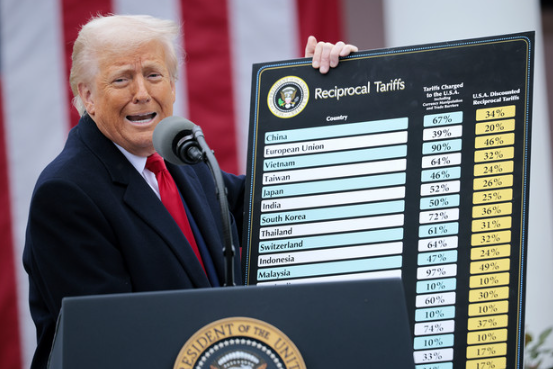
Powell noticed that “larger tariffs are pushing up costs in some classes of products, leading to larger total inflation,” however described the impact as primarily a one-time improve within the value stage moderately than an enduring supply of inflation. Even so, he warned that these value pressures might persist longer than anticipated and mentioned that the Fed would alter coverage if essential to preserve inflation beneath management.
The Fed now faces a “difficult scenario” with “no risk-free path for coverage,” Powell emphasised. Inflation dangers stay tilted to the upside, whereas dangers to employment have grown on the draw back. Tightening coverage an excessive amount of might additional weaken the labor market, however easing too shortly would possibly reignite inflation pressures. In keeping with its framework, the Fed is taking what Powell known as a balanced method to managing each side of its mandate. With the labor market softening, he mentioned, the steadiness of dangers has shifted, prompting the committee to take one other step towards a extra impartial coverage stance.
The Fed, Powell added, stays properly positioned to reply swiftly to new financial developments. Policymakers will proceed to be guided by incoming knowledge and the evolving steadiness of dangers when setting the stance of financial coverage. The central financial institution nonetheless faces uncertainty on each side of its mandate, and committee members maintain sharply differing views concerning the path forward. Powell pressured that coverage is just not on a preset course, and that “an additional discount within the coverage price on the December assembly is just not a foregone conclusion — removed from it.”
Alongside its price minimize, the Fed introduced it’s going to finish the runoff of its steadiness sheet on December 1, concluding greater than three years of quantitative tightening. Powell mentioned the transfer displays the Fed’s “long-stated plan…to cease steadiness sheet runoff when reserves are considerably above the extent we choose in line with ample reserve situations.” He pointed to tightening monetary situations in short-term funding markets. The choice, Powell famous, represents the “subsequent part of our normalization plans” that’s designed to protect stability moderately than to sign a brand new coverage route.
The Fed’s newest strikes reveal a central financial institution struggling to navigate competing dangers with imperfect instruments. The twin mandate virtually requires financial policymakers to deal with rising costs and falling employment as opposing issues moderately than contemplating the extent to which the actions in costs and employment are in line with the underlying fundamentals. A nominal GDP goal would collapse the false distinction between the 2 sides of the mandate, permitting the Fed to stabilize demand instantly and let costs and employment alter naturally. Such an method would cut back the necessity for fine-tuning and spare policymakers from having to decide on — repeatedly — between combating inflation and defending jobs.