































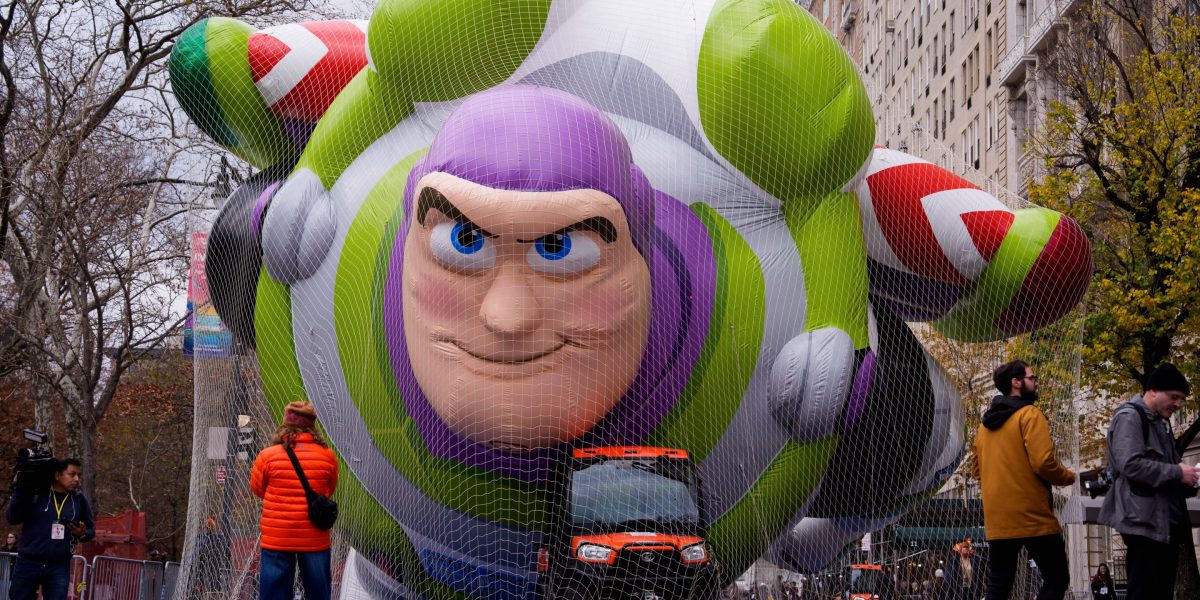
For thousands and thousands of People, Thanksgiving morning begins the identical approach: in entrance of a tv, watching big character balloons float down Manhattan’s streets whereas skilled dancers, elaborate floats, and movie star performers parade previous.
The Macy’s Thanksgiving Day Parade drew over 31 million viewers throughout the U.S. final 12 months, together with about 3.5 million individuals who really lined up on New York Metropolis’s streets to look at it in particular person. However this annual custom didn’t come from some company technique, however from an concept that Macy’s staff introduced on to firm management over a century in the past.
To grasp how a division retailer that opened when Abraham Lincoln was nonetheless a personal citizen created America’s most-watched vacation parade, one should first perceive Macy’s uncommon origins and why immigrant employees on the firm noticed a parade as the right strategy to have fun.
Macy’s humble beginnings
Rowland Hussey Macy opened his dry items retailer on the nook of Sixth Avenue and 14th Road in Manhattan on October 28, 1858.
His first day’s gross sales totaled simply $11.08.
Abraham Lincoln was nonetheless two years away from changing into president, having lately delivered his well-known “Home Divided” speech. Macy, a former Nantucket whaler whose crimson star tattoo from his crusing days would turn out to be the corporate’s brand, had lastly discovered a formulation that labored after 4 earlier failed makes an attempt within the retail house. However enterprise picked up, and by 1924, Macy’s had relocated to Herald Sq. and grown into the world’s largest retail house.
That 12 months, a big share of Macy’s workforce consisted of first-generation European immigrants. In keeping with Susan Tercero, the manager producer of the Macy’s Thanksgiving Day Parade, “there have been lots of people who labored for Macy’s who have been immigrants from Europe and once they received to the vacation season, lots of them got here collectively and approached management and stated that they actually wished to have fun the vacations in a approach that was extra in vogue with what they’d accomplished over in Europe, which have been these vacation parades. After all, Macy’s stated certain.”
Macy’s management agreed to the proposal, seeing it each as a present to staff and as a advertising alternative to drive vacation procuring site visitors.
Macy’s first Thanksgiving Day parade
On November 27, 1924—Thanksgiving morning—the primary parade started. Roughly 10,000 individuals participated, together with costumed Macy’s staff dressed as clowns, cowboys, knights, and different characters, together with floats depicting Mom Goose scenes, circus acts, skilled bands, and reside animals borrowed from the Central Park Zoo.
The parade marched six miles from Harlem to Herald Sq., the place Santa Claus arrived on a sleigh manufactured from ice, signaling the official begin of the Christmas procuring season. An estimated 250,000 spectators lined the streets—far exceeding organizers’ expectations. Macy’s instantly declared it an annual custom.
By 1927, considerations emerged that the reside animals have been horrifying kids. Macy’s turned to Tony Sarg, a German-American puppeteer who had beforehand designed the shop’s mechanical window shows, to plan another. Sarg created what he referred to as “upside-down marionettes”—big helium-filled balloons managed by handlers on the bottom quite than strings from above. Felix the Cat turned the primary character balloon, launching an idea that may outline the parade for the following century.
In 1953, NBC started broadcasting the parade nationally, reworking it from a New York spectacle into an American ritual watched in properties throughout the nation. Final 12 months’s 98th annual parade drew a document 31.3 million viewers throughout NBC and Peacock, making it the most-watched leisure telecast on American tv exterior of sports activities.
You may watch the 2025 Macy’s Thanksgiving Day parade—the corporate’s 99th of those, with No. 100 coming subsequent 12 months—under.
For this story, Fortune used generative AI to assist with an preliminary draft. An editor verified the accuracy of the data earlier than publishing.