




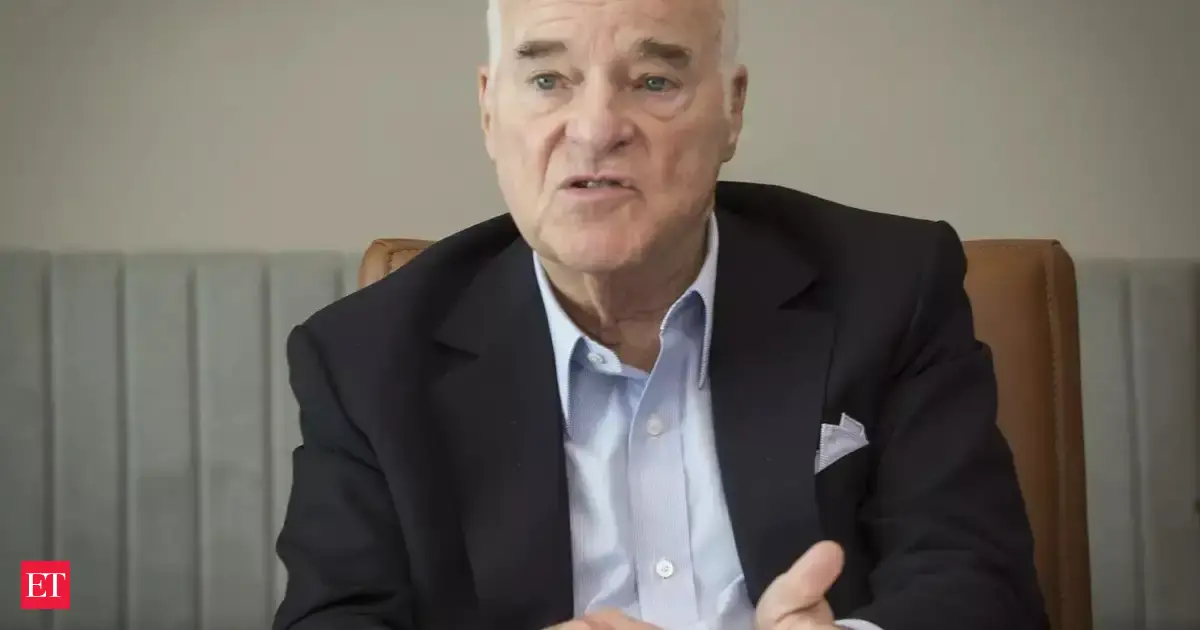






























John Williams, president and chief government officer of the Federal Reserve Financial institution of New York, speaks throughout an Financial Membership of New York (ECNY) occasion in New York, US, on Thursday, Sept. 4, 2025.
David Dee Delgado | Bloomberg | Getty Photos
Communication on the Federal Reserve, significantly on the highest ranges, not often occurs by chance.
Messages that come out of the highest echelon, significantly the chair, vice chair and the highly effective New York Fed president, are measured fastidiously, calibrated between delivering clear concepts about coverage with out inflicting undue response in monetary markets.
That is why a speech Friday from the present New York Fed chief, John Williams, mattered a lot to markets. Together with his place comes membership within the Fed’s management troika, a gaggle that additionally consists of Chair Jerome Powell and Vice Chair Philip Jefferson.
So when Williams gave a nod to the chance of a “additional adjustment within the close to time period” for rates of interest, traders took it as a message from on excessive that the management is inclined for not less than one other price lower someday quickly, seemingly on the December assembly of the Federal Open Market Committee.
“There may be some ambiguity within the phrase ‘close to time period’ – however its most evident studying is on the subsequent assembly,” Krishna Guha, head of world coverage and central financial institution technique at Evercore ISI, stated in a consumer word.
“And whereas it’s attainable that Williams was providing a private view, indicators from the opposite members of the Fed management troika (vice-chairman, NY Fed president) on key dwell coverage points are virtually at all times authorized by the chair and it will be skilled malpractice for him to ship this sign with out Powell’s sign-off,” he added.
Williams’ feedback on charges come at an particularly delicate time for the Fed and monetary markets.
The policymaking FOMC, usually a consensus-driven group generally maligned for missing range of thought, has discovered itself out of the blue divided.
On one aspect are officers who see coverage as nonetheless holding again development and open for adjustment, whereas the opposite is represented by these worrying about inflation who see stable financial development without having for additional cuts, significantly in gentle of reductions already within the books from September and October.
Whereas Williams offered little perception into the longer-term trajectory of price expectations, not less than within the quick time period it appears to be like like senior Fed management backs a lower.
That is significantly necessary to monetary markets which have wobbled these days over fears of a man-made intelligence bubble, coupled with ongoing geopolitical issues and uncertainty over Fed financial coverage.
Shares rallied Friday, with futures turning round after Williams’ feedback prompted a market repricing towards the expectation of a price lower in December. Ongoing issues about AI tempered the rally, however merchants continued to position bets on a December transfer, assigning a 73% probability of a discount, in keeping with the CME Group’s FedWatch gauge.
Williams seemingly saved the market Friday from a possible sell-off that seemed to be taking form, with shares exterior of tech principally agency and supporting the most important averages on the prospects of decrease charges. The most important benchmarks have been hit laborious Thursday and traders feared one other large slide was coming Friday. Main averages vacillated by way of the morning however have been at session highs heading into afternoon buying and selling.
S&P 500, 5 days
“Williams intervention got here after a number of different Fed audio system indicated reservations about [December] however drew again from categorical statements, maybe indicating they acknowledge the [December] battle was turning right into a disaster of governance on the Fed and see the necessity to give Powell house to make the decision,” Guha stated.
To make certain, different audio system weren’t as enthusiastic as Williams.
Regional Fed Presidents Susan Collins of Boston and Lorie Logan of Dallas each voiced hesitation about additional cuts. In a CNBC interview, Collins expressed concern about inflation. Logan was much more hawkish, saying she wasn’t even certain she would have voted for the earlier two cuts. Collins votes this 12 months on the FOMC, whereas Logan will get to vote in 2026.