

































PSU Banks Gain Ground
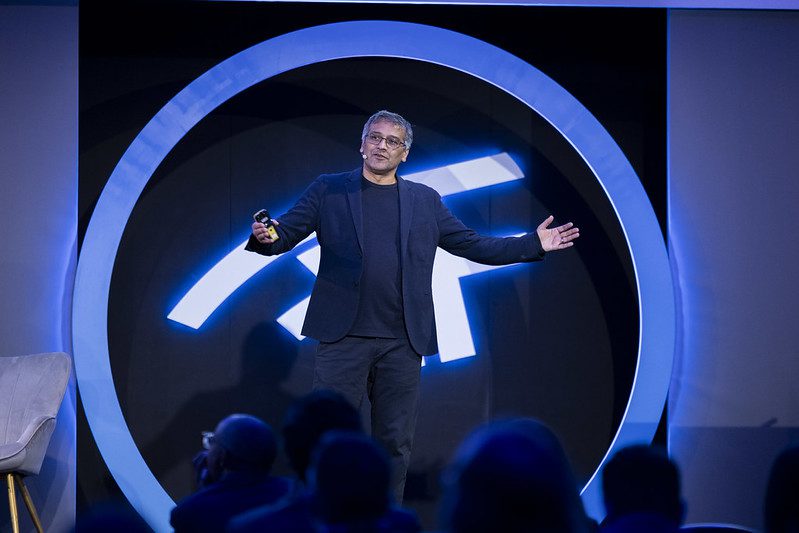
“Plenty happening within Indian markets. PSU banks are doing very well for themselves. In fact, the Nifty Bank has outperformed in the last couple of days,” Mehta said in an interview to ET Now. He highlighted that PSU banks are closing a multi-decade gap with private sector banks in both valuations and performance.
“There was a time when private sector banks were gaining market share. Their growth rates were far superior, anywhere from double the growth rates of the industry, and the PSU banks’ NPA levels were well below. But now many PSU banks are giving private sector banks a run for their money, and investors recognize that. Balance sheet qualities are far better, they are back into growth mode, and that is reflected in the stock prices. Still, there is a lot of gap between the two segments within the banking industry,” he added.
Mehta believes the rerating of PSU banks is likely to continue, but cautions that sustaining current NIMs in an increasingly competitive banking sector will be challenging.
Capital Goods Sector on an Upward Trajectory
On capital goods companies like BHEL, Mehta emphasized the significance of execution. “Execution is the biggest risk in capital goods manufacturing companies, and sometimes execution is not only at their end but also at the customer end because sometimes the customer is not ready to let the project go ahead.”
Despite execution risks, Mehta sees strong potential due to robust order books and capex cycles. “We are in a nice upward cycle as far as capex is concerned, and across the board, capital goods, engineering, procurement, and construction companies are sitting on record order book positions, great earning visibility for the next two to three years, and reasonable valuations.” He also favors companies with overseas orders such as L&T and KEC International, which benefit from diversified revenue streams.
FMCG Leadership and Investment Caution
Mehta expressed caution on FMCG stocks like Dabur. “Frankly, Dabur has just gone off the grid, and so is the case with a lot of FMCG stocks. We just do not track them anymore because, for us, the benchmark to evaluate a company is at least it should grow more than the nominal GDP growth rate, which is 11% or thereabouts. If a business is not growing topline growth of more than 11%, it just kind of falls through our grid. I do not have any view on Dabur or FMCG for that matter, or rather I have a view, and that is negative. Investors who are there in this stock need to diversify out of FMCG.”Infrastructure and Engineering Opportunities
Mehta highlighted the enduring strength of companies with large and diversified order books. “You must have a large proportion of your portfolio in all these engineering, procurement, and construction companies, and the best bet still remains L&T. It is hitting an all-time high, and as I said earlier, we prefer companies which have a diversified order base. L&T has almost 40-50% revenues on order books from outside India, and those order books are at reasonable margins. Certain projects within India can only be executed by L&T, putting them in a different league altogether.”
Other firms of interest include VA Tech Wabag, focused on water projects, as well as various power equipment companies covering solar, wind, and electric distribution equipment.
Wires and Cable Sector
On the wires and cable space, Mehta noted strong quarterly performance despite rising copper prices. “The numbers coming from the cable industry certainly seem to surprise us quarter after quarter. Despite increases in copper prices, they have been able to pass on the price increases and improve their margins. A lot of these companies have built solid brands, which is difficult for new entrants to replicate. The industry is doing well because of investment in renewable energy, which requires more transmission and copper cables, and also due to industrialization and data centres, all of which improve demand for cables.”
However, he cautioned on valuations. “I would remain invested, only reason it is not a buy for us is because the valuations are very rich. They are trading anywhere from 40 to 60 times, which is expensive considering it is largely a B2B business and there is no real product differentiation over there.”