






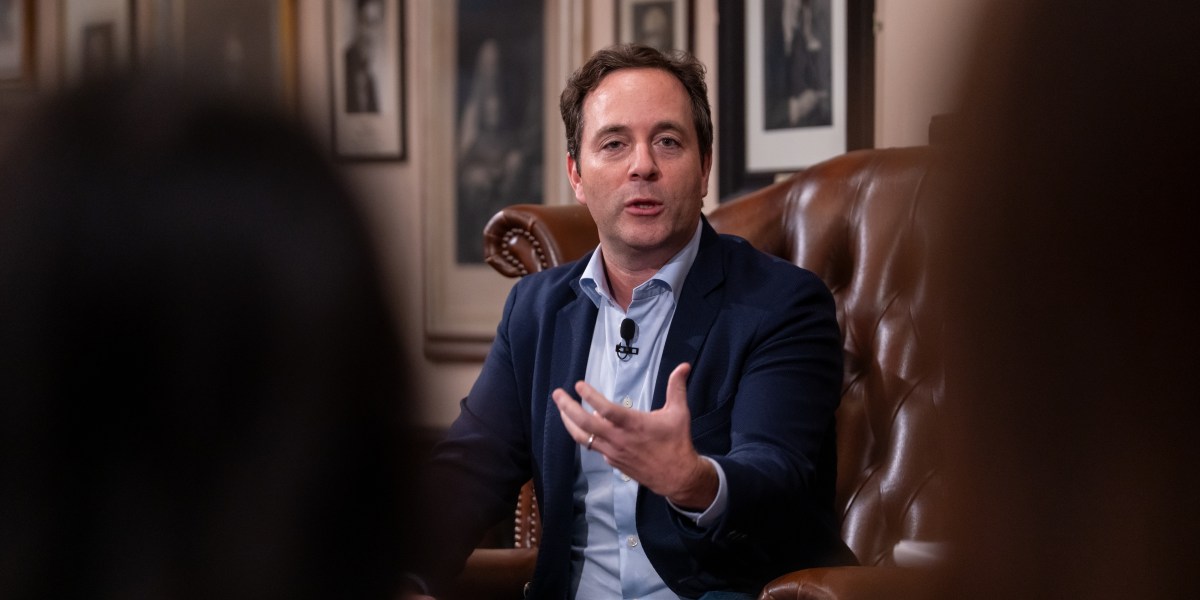


























Speaking today during the quarterly earnings call of US insurance company Travelers, CFO Dan Frey explained that even with the lower retention it now has, thanks to adding a new $1 billion lower layer to the treaty, the firms 2025 catastrophe loss experience would not have seen it make any recoveries from the tower.
As we reported earlier today, Travelers renewed its corporate catastrophe excess-of-loss reinsurance tower for 2026 at the January renewals, adding $1 billion in additional protection through buying a lower layer.
That lower layer reduced the attachment of the corporate cat reinsurance treaty to $3 billion, down from $4 billion in 2025.
As a result, the corporate cat reinsurance treaty provides Travelers with occurrence catastrophe excess-of-loss reinsurance for 2026, as well as covering an aggregation of losses from multiple events that exceed $100 million, attaching from $3 billion and covering a $4.675 billion majority of losses up to the top of the tower at $8 billion.
But, even with that lower attachment, Travelers CFO pointed out that it would not have provided any reinsurance recoveries last year.
In reporting its quarterly results, Travelers stated it experienced approximately $3.7 billion of catastrophe losses in full-year 2025, net of reinsurance.
The company has other reinsurance that may have responded to those losses, including its quota share arrangement with Fidelis. But given the $100 million occurrence deductible for the frequency protection provided by the main corporate cat treaty, this would not have attached, Frey explained.
Responding to an analysts question about the catastrophe reinsurance, CFO Frey said, “The thing you’ve got to remember when you think about the attachment point of the treaty is the first $100 million of every event is ours. So, you can’t just say if we thought we were going to have 3.X billion dollars of cat losses next quarter, anything over 3 goes to the treaty. First $100 million of every event is ours.
“We said, with this treaty, historically, this is really we’re buying tail protection for the balance sheet. That’s still true. Clearly, with the $3 billion retention compared to a $4 billion retention, we’re a lot closer in on the tail of possibly being able to hit that book. But if you look, for example, if we had that treaty in 2025, we would not have attached that treaty.”
During the earnings call, Frey also revealed that Travelers has renewed its quota share arrangement with Fidelis for 2026.
“We continue to value our relationship with Fidelis and are very pleased to have once again renewed our 20% quota share with them,” Frey said. Adding that, “The renewal includes the same loss ratio cap we’ve had in place since the quota share began in 2023.”
Travelers first entered into the 20% quota share reinsurance deal with Fidelis after it made a minority investment in the company in 2023.
Frey also commented on the renewal of the main corporate catastrophe reinsurance treaty at 1/1 2026 during the earnings call.
He said, “We believe an all perils, cat aggregate is the most efficient way to protect the balance sheet. The combination of our industry outperformance, refined reinsurance structures, and more favorable reinsurance pricing, have allowed us to meaningfully improve our coverage with only a modest increase to our total ceded premium costs.”
Further adding on Travelers renewals that, “We also renewed the enhanced casualty reinsurance program first introduced for 2025. We were once again able to purchase working layer coverage on a roughly margin neutral basis.”
As Frey explained, this particular reinsurance arrangement, the corporate cat treaty, is really designed to protect Travelers against tail risks from severe catastrophes like hurricanes or earthquakes, or an aggregation of mid to larger sized events over the course of the year.
Read all of our reinsurance renewal news coverage.
